説明
Galton Board for Visual Probability Learning and Bell Curve Demonstration Classroom Model
Product overview
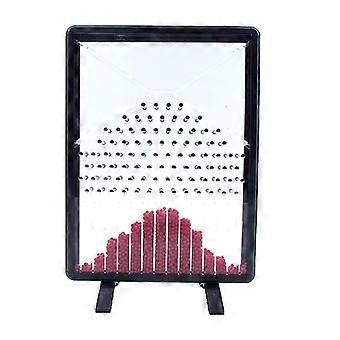
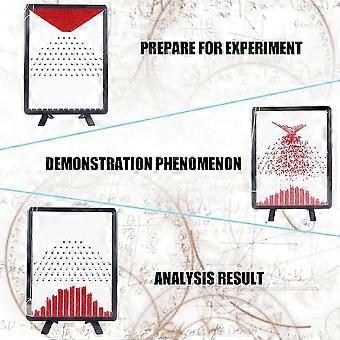
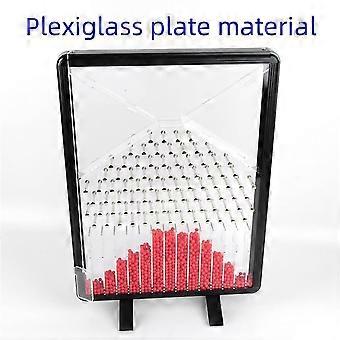
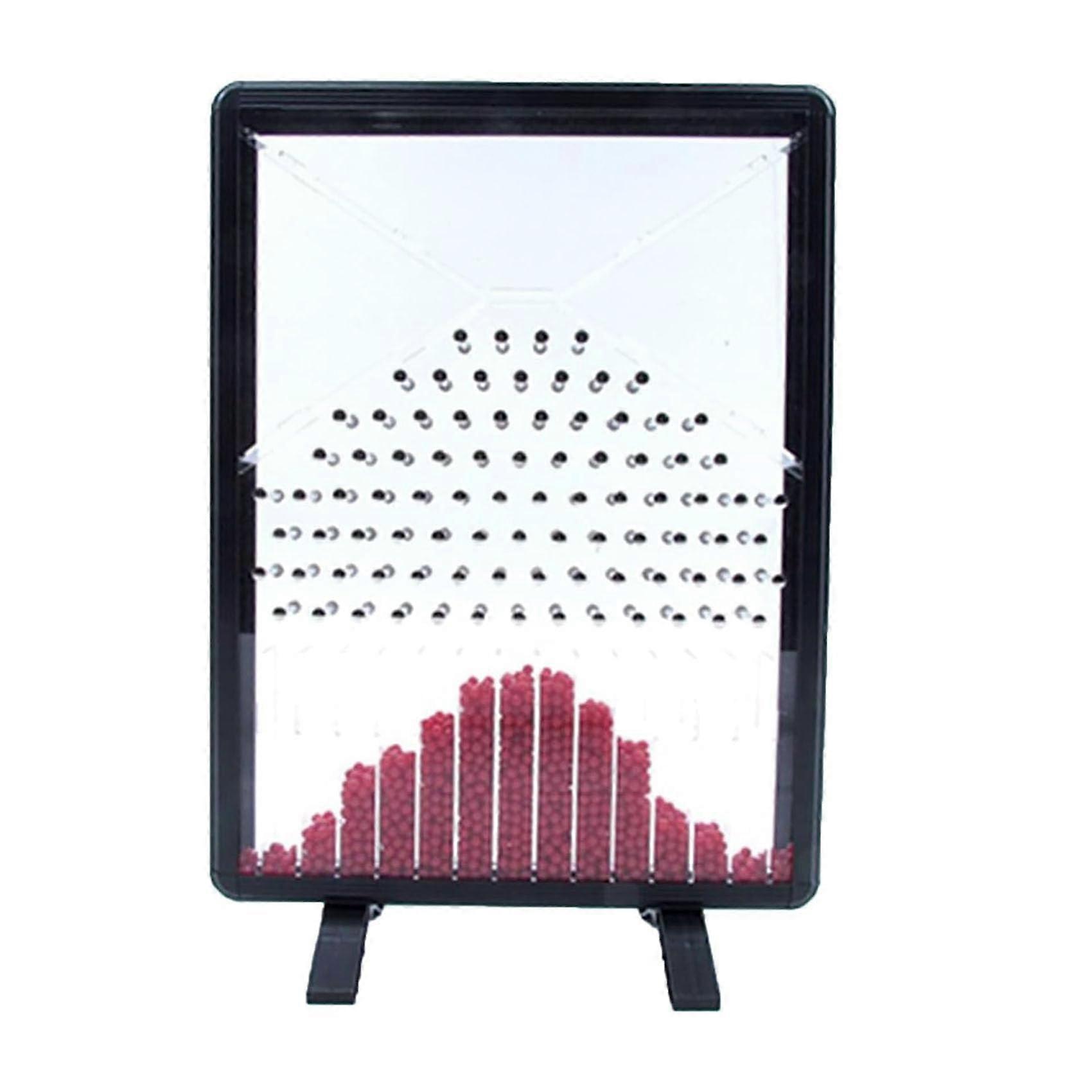
This teaching instrument demonstrates statistical distribution and random processes using a rotating Galton plate and a stream of steel balls. As balls strike rows of pegs and fall left or right with equal probability, their accumulated positions form an approximately bellshaped curve, making abstract probability concepts visible and intuitive.
Key benefits
Clear visualization of the normal distribution: Converts probability theory into a concrete, observable process so students can see how repeated random events produce a bell curve.
Models particle motion and velocity distribution: Serves as a handson analogy for gas molecule behavior and the statistical rules that govern velocity distributions.
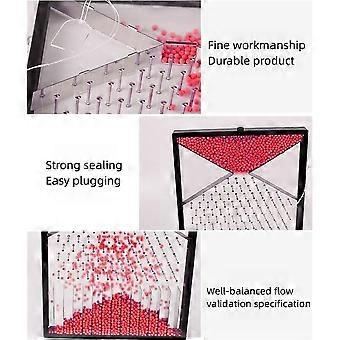
Durable construction for repeated use: Built from plexiglass plates with rows of nails, Vshaped grooves, insert plates, and notches to withstand regular demonstrations and handling.
Versatile instructional tool: Useful for classroom demonstrations, lab experiments, and educational exhibits where interactive, visual learning is preferred.
Function and performance
Operating principle: Rotate the Galton plate and initiate a steady stream of steel balls. Balls bounce off pegs and choose left or right paths with approximately equal probability, producing a statistical distribution across the collection bins.
Educational focus: Designed for teaching models of random phenomena, probability theory, and statistical distribution laws, and for illustrating the concept of rates of motion among gas molecules.
Materials: Plexiglass plate construction with metal peg rows and Vshaped guide grooves for consistent motion and reliable results.
Practical attributes
Function: Demonstrates probability distributions and random processes through physical experiments.
Material: Plexiglass plates, metal pegs, Vshaped grooves, insert plates, and notches for durable assembly.
Performance: Produces repeatable results suitable for demonstration and comparative experiments; can be used to collect data and plot empirical distributions.
Use scenarios
Classroom demonstration: Show students how repeated random events lead to a normal distribution using a live visual and data collection activity.
Laboratory exercise: Use as a practical experiment in statistics or physics labs to gather empirical frequency data and compare with theoretical distributions.
Educational displays and outreach: Install in a science museum, fair exhibit, or handson learning space to engage visitors with a clear demonstration of probability and statistical mechanics.
What makes it stand out
Direct, physical demonstration of abstract concepts that improves comprehension.
Robust materials and simple mechanics suitable for frequent classroom and lab use.
Designed specifically to bridge the gap between theoretical models of molecular motion and observable outcomes.
Contents and setup notes
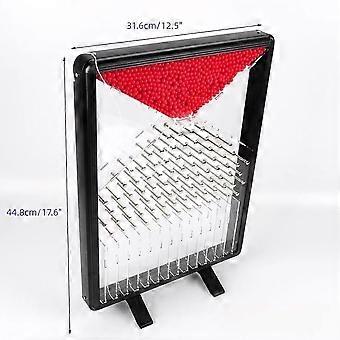
Consists of plexiglass plates, rows of pegs, Vshaped grooves, insert plates, notches, and the mechanism to release steel balls. Follow standard laboratory or classroom setup procedures to secure the plate and ensure consistent ball flow for reliable demonstrations.
-
Fruugo ID:
463183335-974759745
-
EAN:
6091977544356